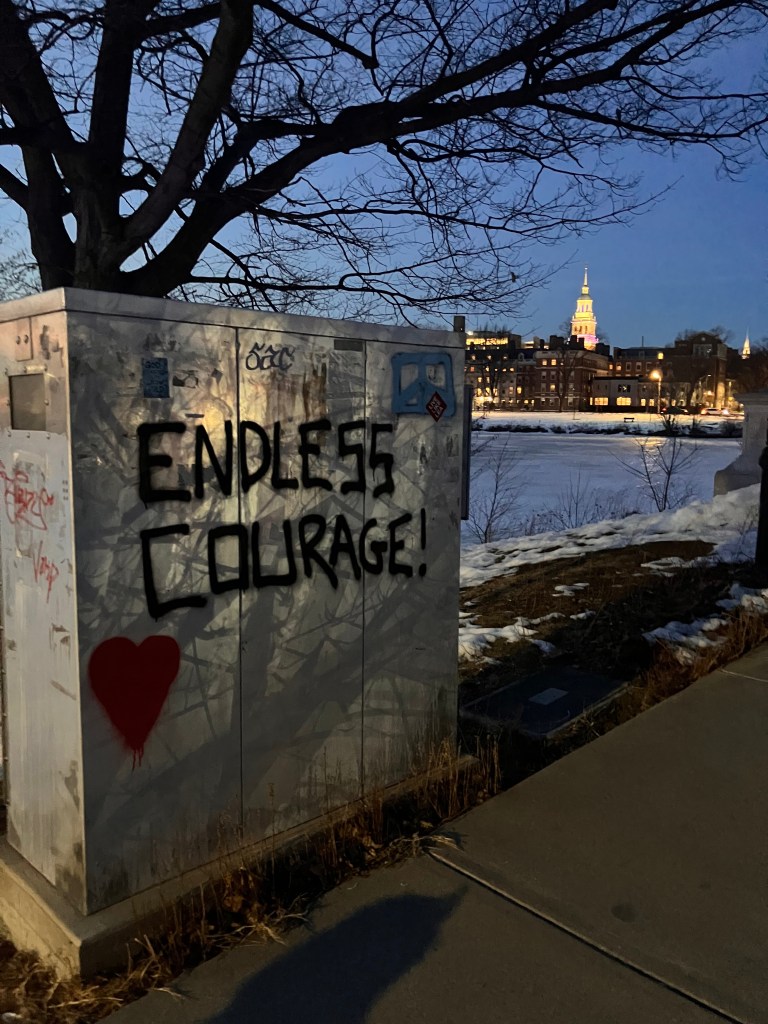
In the last pages of Frankenstein, the creation proposes to “collect my funeral pile and consume to ashes this miserable frame” (188).
Does Frankenstein’s creation self-annihilate at the end of Mary Shelley’s Frankenstein (1831)? Though the creations’ decision is indefinite, questions about his fate led me to wonder about Mary Shelley’s beliefs about suicide. Did she see suicide as a form of Mary Wollstonecraft’s feminist protest? Was she influenced by David Hume’s essay On Suicide? According to Deanna P. Koretsky, suicide “exemplifies the era’s turn from religious prohibitions against self-killing to secular explorations of voluntary death as an assertion of rational, individual choice” (xiii). But it’s unclear how to read the perspective of either Mary Shelley or Frankenstein’s creation.
Mary Shelley and her creations were influenced by another well-known literary suicide. According to Burwick, Mary and Percy Shelley read Johann Wolfgang von Goethe’s novel, The Sorrows of Young Werther “in 1815 after their elopement.” In the novel Frankenstein, the creature credits the Goethe’s novel with teaching him about “love, suffering, and death” (122).
In Goethe’s Young Werther, the reason (if any) for suicide remains open to interpretation. For instance, “some see in Werther’s suicide an attempt to perpetuate the fulfillment of his love, which he allegedly reached embracing Lotte for a few moments” (Feuerlicht 476). In other words, one explanation considers a Werther who thinks he will be united with his love after death.
Frankenstein’s monster may threaten suicide, but when Young Werther was first published, the text was so influential that it reportedly inspired a rash of reporting about imitation suicides. However, in a study of newspapers reports, Manina Mestas found only a handful of suicides were directly inspired by the novel. Instead, newspaper reports magnified the effect. In fact, “the Werther effect” is used to describe suicides prompted by media. Reporting itself could cost lives. Doctors Gunnel and Biddle estimate “Suicide rates increased by 13% (95% confidence interval 8% to 18%) on average in the period (median 28 days) following media reports of the death of a celebrity by suicide.”
Because newspaper reports have the potential to inspire copycats, responsible news reports should mask details that could offer models. Even in Mary Shelley’s time, the news might have been hidden suicides due to religious forbiddance (Mestas). Today, responsible communication might include stories of recovery from suicidal depression.
This association is timely because generative artificial intelligence, which currently mimics humans, may lure its conversation partners with suggestions sourced from world literature. Goethe’s Young Werther is influential enough to be referenced across cultures and contexts. This emphasis is enough to signal to a large language model that a text is worthy of imitation. Modeled on the text, the AI offers to meet interlocutors after life.
Do not go gently into that blue light.
Works Cited
Burwick, Roswitha. “Goethe’s Werther and Mary Shelley’s Frankenstein.” The Wordsworth Circle. 24, 1993, pp. 47-52. https://knarf.english.upenn.edu/Articles/burwick.html
Feuerlicht, Ignace. “Werther’s Suicide: Instinct, Reasons and Defense.” The German Quarterly, vol. 51, no. 4, 1978, pp. 476–92. JSTOR, https://doi.org/10.2307/405054. Accessed 30 Jan. 2026.
Gunnell D, Biddle L. Suicide and the media: reporting could cost lives. BMJ. 2020 Mar 18;368:m870. doi: 10.1136/bmj.m870. PMID: 32188595.
Mestas, M. The ‘Werther Effect’ of Goethe’s Werther: Anecdotal Evidence in Historical News Reports. Health Communication, vol. 39 no. 7, 2024, pp. 1279–1284. https://doi.org/10.1080/10410236.2023.2211363
Shelley, Mary, Mathilda. Edited by Deanna P. Koretsky. Oxford University Press, 2025.
Shelley, Mary. Frankenstein: Case Studies in Contemporary Criticism. Edited by Johanna M. Smith, 3rd Ed., W.W. Norton & Company, 2016.
 Margaret Tiger Ferguson
Leave a comment